Know-how does not compound
Each new block repeats old timing fixes. When senior engineers leave, the lessons leave too.
 ARA Lab
Recursive Self-Improvement for Semiconductor Engineering
An agent writes the circuit. Chip tools grade it. Those graded runs train the next model. The loop is built to run on machines you already control, so the design does not have to leave your network.
The Problem
Each new block repeats old timing fixes. When senior engineers leave, the lessons leave too.
Public models never trained on your proprietary libraries, scripts, or past designs.
Foundry process data comes under NDA. Design files are the company’s core asset. Neither can go to an outside AI service.
Customer Stories
We built a recursive self-improvement harness around the customer’s own design checks. Agents design, their tools grade every attempt, and the graded runs train a model that gets better each round. It all runs on their machines.
We worked side by side with their engineers and fine-tuned a model on their own design data and expert corrections. The model runs inside their network and belongs to them.
How should an RSI system evaluate agent performance on open-ended design tasks when self-reported claims cannot be trusted?
How should an RSI loop decide what candidate to explore next across vast design spaces without waiting hours for sign-off?
How can a self-improving design loop retain and query verified lessons across sessions so agents never repeat failed fixes?
How should complex branching design iterations and negative results be packaged so future agents can inherit and rerun them?
How can autonomous agents formalize and mathematically verify engineering hypotheses beyond ambiguous natural language?
How do we enforce experimental rigor, controls, and auditability in autonomous multi-step agent workflows?
Can autonomous AI agents design, execute, and debug complex multi-step technical experiments end-to-end?
If you’re designing silicon and want to see what recursive AI can do on your workflows, we’d love to chat.
Talk with usTeam
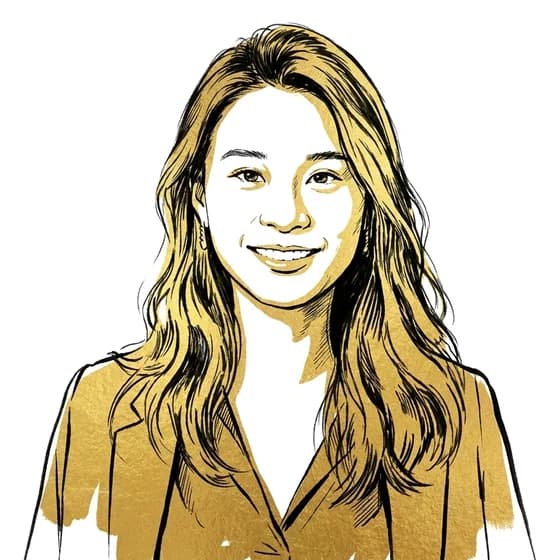
Research scientist at Meta Superintelligence Lab. Machine learning research at MIT and Apple. Ph.D. in Computer Science from the University of Michigan.
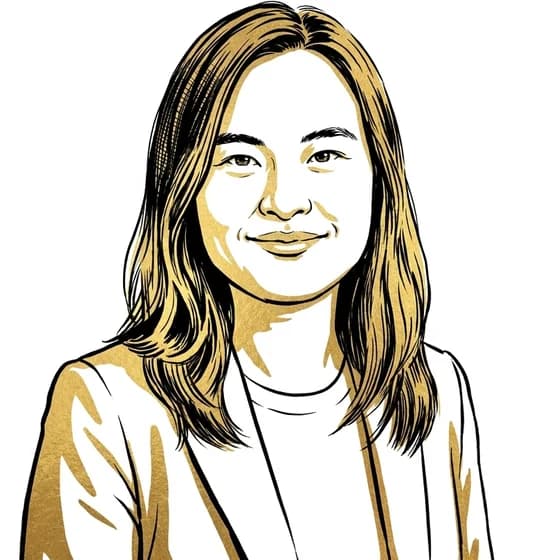
Memory subsystem architecture for Meta’s MTIA accelerator. High-performance networking silicon at Marvell. CPU design verification on Apple A5, A6, and A7.
Our team and advisors come from




Backed by